Power management & PowerLogic System
⚡ Power Management
Power management is the discipline of monitoring, controlling, optimising, and protecting electrical power systems to improve visibility, reliability, efficiency, safety, and cost performance.
It covers far more than basic metering — it spans power quality, energy analytics, fault diagnostics, and operational decision‑making.
🟦 What Power Management Includes
- Energy visibility — consumption, demand, cost
- Power quality monitoring — voltage, harmonics, disturbances
- System reliability — alarms, events, fault analysis
- Efficiency & optimisation — load profiling, benchmarking
- Safety & asset protection — insulation issues, overloads, PQ events
⚡ PowerLogic System
PowerLogic
is Schneider Electric’s power monitoring and management ecosystem.
It provides the meters, communications, and software
needed to implement modern power management.
🟧 What a PowerLogic System Consists Of
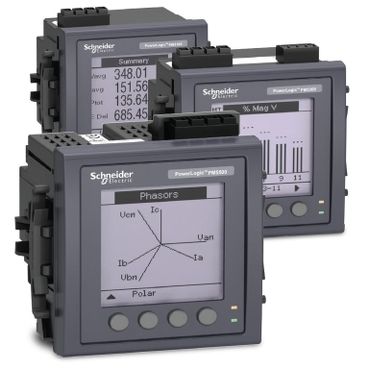
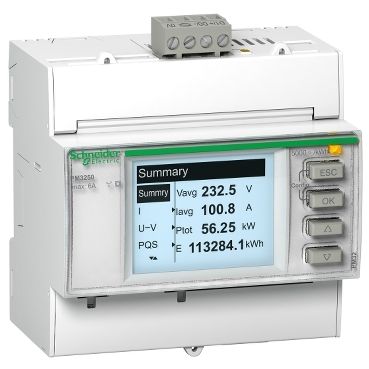
- Power meters & PQ analysers — measure V, I, kW, kWh, harmonics, events
- Communication layer — Ethernet/serial networks, BMS/SCADA integration
- Power management software — dashboards, alarms, PQ analysis, reporting
- Applications — energy optimisation, reliability, compliance, diagnostics
🟨 Where PowerLogic Is Used
- Data centres
- Hospitals
- Industrial plants
- Commercial buildings
- Utilities & infrastructure
🟩 Relationship Between the Two
- Power management= the objective
- PowerLogic= the system used to achieve it
PowerLogic provides the instrumentation, data, and analytics that make effective power management possible.
⭐ One‑line summary
Power management is the discipline; PowerLogic is the Schneider Electric ecosystem that delivers the visibility and analytics to achieve it.