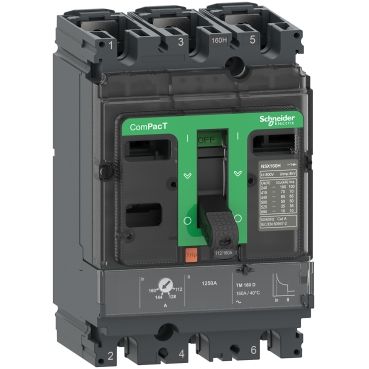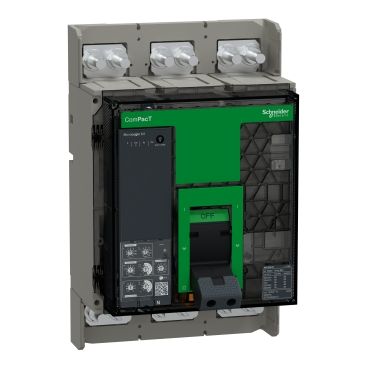

Molded Case Circuit Breakers

ComPacT circuit‑breakers are Schneider Electric’s global reference for compact, high‑performance MCCBs that combine robust protection, digital monitoring, and connectivity. They protect feeders and machines, improve uptime through diagnostics, and enable energy‑aware operation in commercial and industrial installations.

Key technical strengths

  • Proven protection: reliable thermal/magnetic and electronic trip options for overload and short‑circuit clearing.
  • Digital features: integrated metering, event logging, and diagnostics for condition‑based maintenance.
  • Connectivity: communication modules for Modbus/Modbus‑TCP, Ethernet, and EcoStruxure integration.
  • Compact footprint: high current density for space‑constrained switchboards.
  • Wide range: frame and trip unit options to cover typical LV feeder duties up to several kiloamps.

Primary benefits for operations

  • Safety and selectivity: fast, reliable fault clearing with adjustable trip curves for coordination.
  • Reduced downtime: remote diagnostics and local event logs speed troubleshooting.
  • Lower operating cost: energy metering and load visibility support efficiency programs.
  • Simplified maintenance: predictive alerts reduce unplanned interventions and spare‑part needs.
  • Scalability: modular accessories and communication options ease future upgrades.

Practical selection checklist

  • Rated current — choose continuous rating ≥ expected feeder load.
  • Breaking capacity (Icu) — select Icu ≥ prospective fault current at installation point.
  • Trip unit type — thermal/magnetic for simple feeders; electronic trip units for adjustable protection, metering, and logging.
  • Communication needs — include a communication module if remote monitoring or EcoStruxure integration is required.
  • Coordination — verify selectivity with upstream ACBs (MasterPact) and downstream protective devices.
  • Environment & mechanical fit — confirm frame size, mounting, IP rating, and ventilation in the switchboard.
  • Spare strategy — keep spare trip units and mechanical accessories for critical feeders.

Integration, digitalisation, and cybersecurity

  • Edge visibility: use ComPacT’s metering and event logs to feed SCADA/EMS and drive predictive maintenance.
  • EcoStruxure compatibility: connect breakers to EcoStruxure for centralised dashboards, alarms, and analytics.
  • Secure connectivity: apply network segmentation, device authentication, and firmware management to reduce cyber risk.
  • Data strategy: define which metrics (I, V, energy, events) are required and the reporting cadence before enabling communications.

Commissioning, testing, and lifecycle best practices

  • Pre‑commission tests: insulation resistance, polarity, mechanical operation, and primary injection for trip verification.
  • Commissioning: set and document trip curves; perform coordination tests with upstream devices.
  • Routine maintenance: thermal imaging, contact inspection, mechanical operation checks, and firmware updates for electronic trip units.
  • Spare parts: stock trip‑unit modules and critical accessories to minimise MTTR.
  • End‑of‑life planning: plan for firmware support and replacement options to avoid unsupported devices in critical systems.