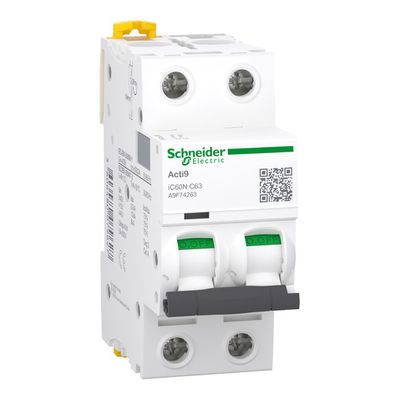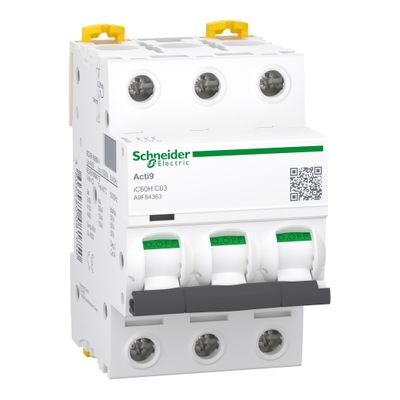

Miniature circuit breaker (MCB)
⚡ Miniature Circuit Breaker (MCB)
An MCB
is a low‑voltage automatic overcurrent protection device
used in homes, offices, and light industrial panels.
It protects final circuits against overload
and short‑circuit faults, and can be reset
after tripping — unlike fuses.
🟦 What an MCB Does
- Protects wiring & loads — interrupts abnormal current
- Replaces fuses — reusable, safer, faster
- Provides clear fault indication — tripped handle shows the affected circuit
🟧 How an MCB Works
- Thermal trip — bimetal strip bends under sustained overload
- Magnetic trip — electromagnet trips instantly on short circuit
Both mechanisms open the contacts to stop current flow and prevent damage or fire.
🟨 Tripping Curves (Common Types)
- Type B — residential loads (lighting, sockets)
- Type C — commercial loads, small motors
- Type D — high‑inrush industrial equipment
🟩 Key Advantages
- Reusable — reset after fixing the fault
- Fast & precise — better than fuses for overcurrent detection
- Safe handling — no exposed conductive parts
- Easy troubleshooting — clear trip indication
🟫 Typical Applications
- Residential DBs
- Commercial panels
- Branch‑circuit protection
- Individual appliances
⭐ One‑line summary
An MCB is a resettable, fast‑acting overcurrent protection device for final circuits, providing safe and reliable protection against overloads and short circuits.