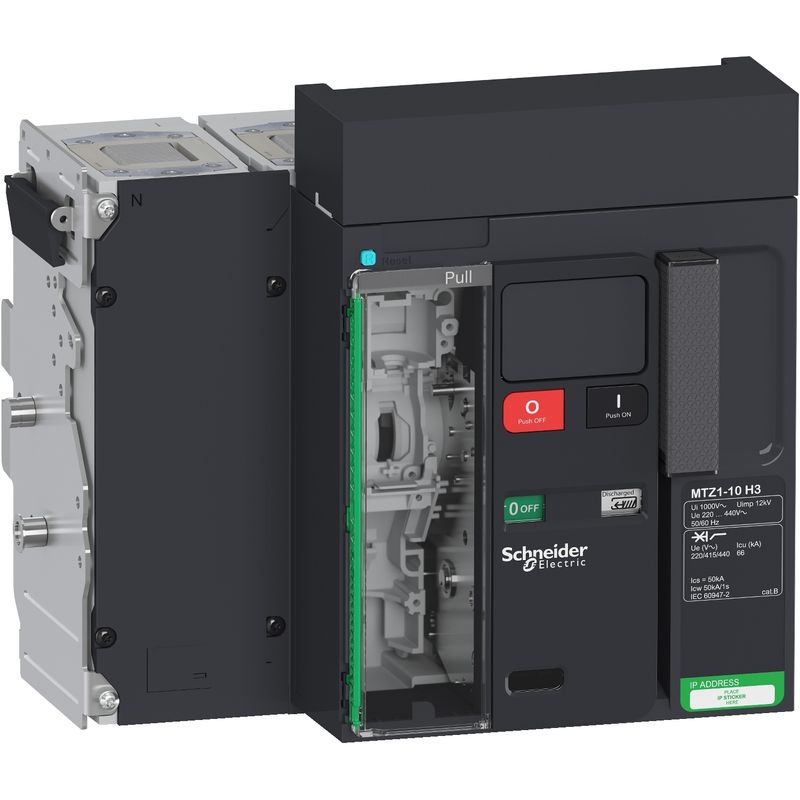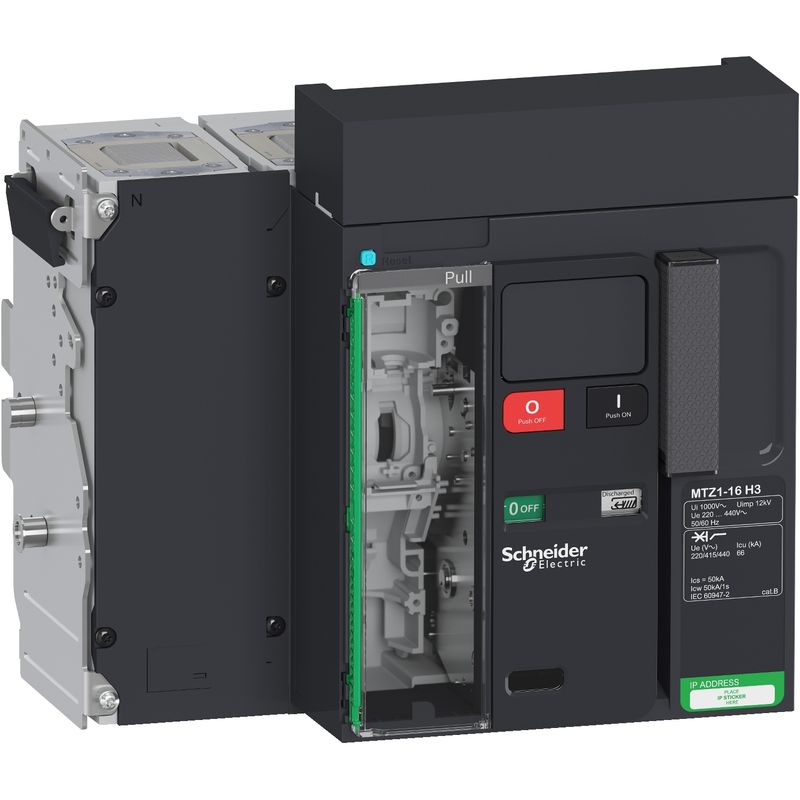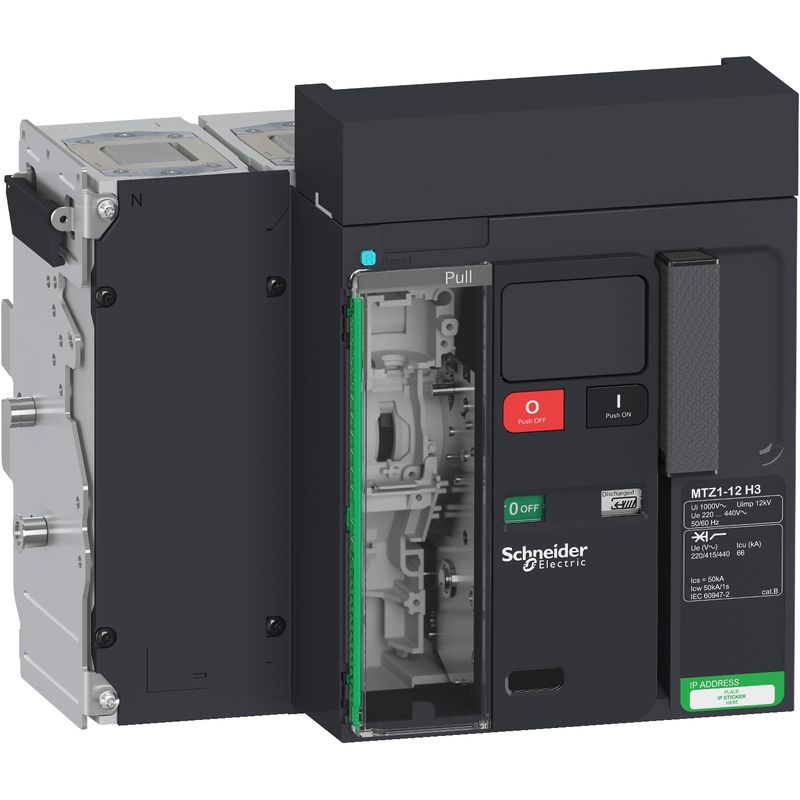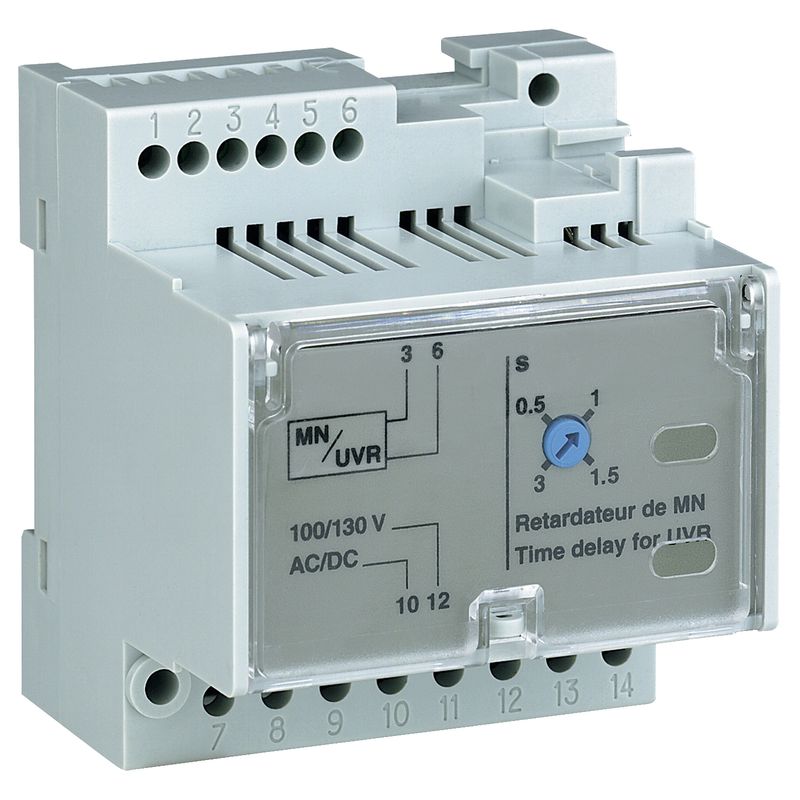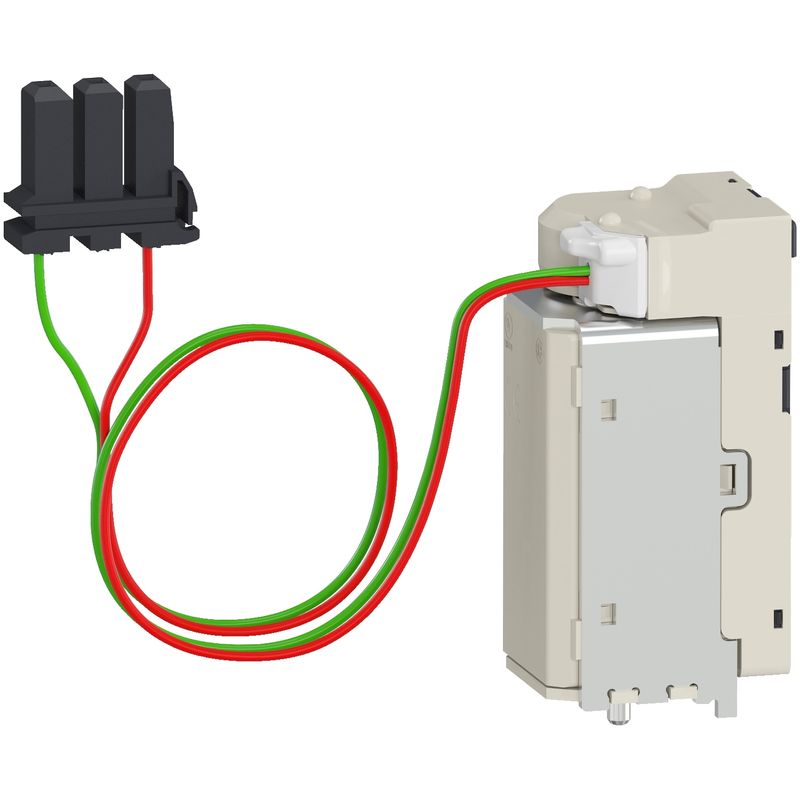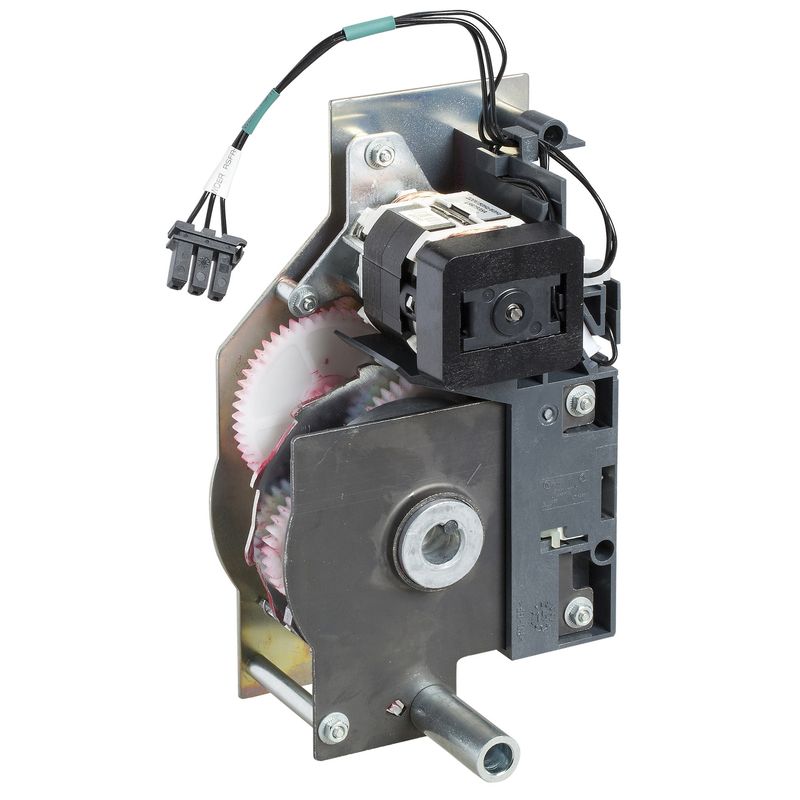

MasterPact MTZ is Schneider Electric’s high‑capacity air circuit breaker family for low‑voltage mains (frames up to 6300 A) that combines robust mechanical protection with Micrologic X digital trip units for metering, diagnostics, communications, and advanced protection functions. It’s intended for main incomers in large switchboards, data centres, heavy industry, and other critical installations where selectivity, monitoring, and future expandability matter.

Core capabilities

  • Current range: up to 6300 A for main incomers.
  • Protection: adjustable long‑time, short‑time, instantaneous, and earth‑fault functions; advanced fault logging and event history.
  • Digital: Micrologic X trip units provide metering, waveform capture, event logs, and networked communications.
  • Modular: plug‑in/replaceable trip units and communication modules for easier upgrades and spares management.
  • Integration: native compatibility with EcoStruxure, BMS, SCADA, and common industrial protocols for centralised monitoring and analytics.
  • Use cases: main incomers, critical power distribution, data centres, large industrial plants, infrastructure projects.

Selection checklist (practical)

  1. Define system parameters — supply voltage, nominal incomer current, and calculated prospective fault current (kA).
  2. Choose frame and trip unit — pick MTZ frame sized for the incoming current and a Micrologic X variant that supports the required protection functions and metering.
  3. Verify breaking capacity — ensure the chosen frame’s Icu/Ics ≥ prospective fault current at the incomer.
  4. Decide communications — Ethernet/Modbus/IEC 61850/other modules depending on integration needs.
  5. Plan selectivity — coordinate MTZ settings with downstream ComPact/NSX MCCBs and motor starters (TeSys) for discrimination.
  6. Environment & derating — account for ambient temperature, altitude, enclosure ventilation, and grouping.
  7. Spare strategy — keep spare Micrologic modules and mechanical parts for critical systems.

Commissioning and lifecycle best practices

  • Pre‑commission tests: insulation resistance, polarity, mechanical operation, and primary injection testing of trip units.
  • Commissioning: set and document trip curves; validate selectivity with downstream devices; test ATS sequences if present.
  • Monitoring: enable event logging and trending; feed key metrics to the energy/asset management platform.
  • Maintenance: periodic mechanical operation checks, contact inspection, thermal imaging under load, and firmware updates for Micrologic units.
  • Security: apply network segmentation, device authentication, and firmware management for digital trip units.

Integration and digital strategy

  • Edge telemetry: use Micrologic X metering and event data to feed EcoStruxure or SCADA for dashboards, alarms, and predictive maintenance.
  • Data plan: define which metrics (I, V, energy, harmonics, events) are required and the reporting cadence before enabling communications.
  • Cyber hygiene: isolate breaker management networks from corporate IT, use secure protocols, and maintain firmware lifecycle plans.

Illustrative coordination sketch (assumed scope and approach)

To make this immediately useful, I’ll assume a 415 V 3‑phase system, a MasterPact MTZ incomer feeding multiple ComPact NSX feeders. The goal is selective clearing, so a downstream NSX clears a local fault without tripping the MTZ incomer.

Assumed example components

  • Incomer: MasterPact MTZ, nominal 1600 A incomer.
  • Feeders: ComPact NSX feeders rated 100 A, 250 A, 400 A.
  • Prospective fault level: site study indicates ~50 kA at incomer.

Coordination approach (stepwise)

  1. Set feeder trip units first — configure each NSX with long‑time pickup slightly above feeder continuous load (e.g., 1.0–1.2 × In) and appropriate long‑time delay to tolerate motor starts. Enable short‑time/instantaneous only where necessary to clear high‑magnitude faults quickly.
  2. Set MTZ long‑time — set incomer long‑time pickup above the largest feeder long‑time pickup, so normal feeder clearing does not operate the incomer. Use a longer long‑time delay on the incomer to allow downstream devices to clear transient overloads.
  3. Short‑time/instantaneous coordination — set MTZ short‑time/instantaneous thresholds higher than the highest feeder instantaneous setting to preserve selectivity for faults inside a feeder. If absolute selectivity cannot be achieved, use time‑graded short‑time delays or zone-selective interlocking.
  4. Earth‑fault coordination — coordinate residual/earth settings so feeder earth faults clear locally; set incomer earth‑fault pickup higher or with a time delay to avoid nuisance trips.
  5. Validate with primary injection — perform primary injection tests on representative feeders and the incomer to confirm actual trip times and selectivity.
  6. Document — record all settings, test results, and the coordination study for future audits.

Deliverable I can produce immediately(based on the assumed scope above)

  • One‑page coordination sketch showing: MTZ incomer role, recommended protection hierarchy, example relative pickup/delay relationships, and a short checklist for primary injection validation.

Filters

Filters