
Electronic Pressure Sensors
⚡ XMLP Series — Electronic Pressure Switch (Telemecanique Sensors)
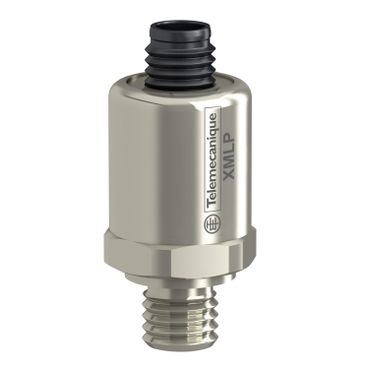
The XMLP series
is part of Telemecanique Sensors’ electronic pressure‑control
family.
It is a compact, high‑performance electronic pressure switch
designed for:
- Pumping systems
- Hydraulic circuits
- HVAC systems
- Machine tools
- Industrial automation
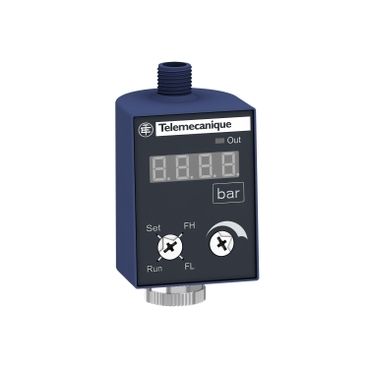
It is often paired with the ZMLP remote monitor when the switch is installed in a hidden or inaccessible location.
🔧 Key Features of the XMLP Series
1. Electronic Pressure Switching
- Uses a solid‑state pressure transducer
- Provides precise switching at configurable setpoints
- No mechanical wear (unlike diaphragm/piston switches)
2. Compact, Rugged Design
- IP65/IP67, depending on model
- Suitable for industrial environments
- Resistant to vibration and pressure spikes
3. Adjustable Setpoints
- Single or dual switching thresholds
- Configurable hysteresis
- Ideal for pump control, compressor control, and hydraulic safety
4. Compatible With ZMLP Remote Monitor
When the XMLP is installed in a hidden location, the ZMLP module provides:
- Remote pressure display
- Remote configuration
- Alarm outputs
- Diagnostic information
5. Wide Pressure Ranges
Typical XMLP ranges include:
- Vacuum
- Low pressure (0–10 bar)
- Medium pressure (0–100 bar)
- High pressure (up to 600 bar, depending on model)
6. Electrical Outputs
- 1 or 2 solid‑state outputs
- PNP or NPN
- Some models include analogue output (0–10 V or 4–20 mA)
🧩 XMLP vs XMLR vs ZMLP (Quick Comparison)
| Series | Type | Display | Best Use |
|---|---|---|---|
| XMLP | Electronic pressure switch | No | Hidden installations, remote monitoring |
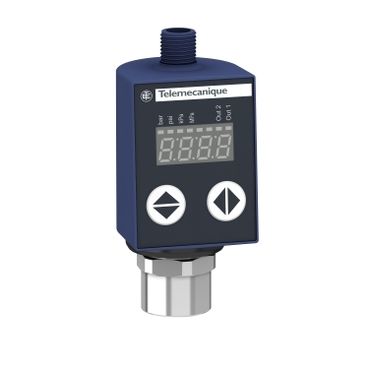
| XMLR | Electronic pressure switch | Yes | Local monitoring, visible installations |
| ZMLP | Remote monitor | Yes | Remote display for XMLP |
🏭 Applications of XMLP
- Pumping systems
- Hydraulic systems
- HVAC systems
- Machine tools
- Industrial automation
⭐ One‑line summary
XMLP is Telemecanique’s compact, electronic pressure switch designed for precise industrial pressure control, often paired with the ZMLP remote monitor when installed in hidden locations.