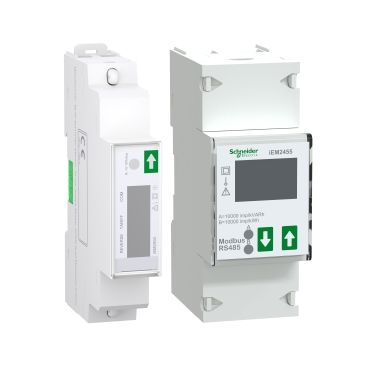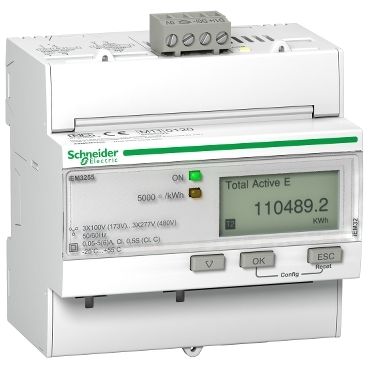
Din Rail Energy meter
⚡ Acti 9 iEM Energy Meters
Acti 9 iEM
meters are Schneider Electric’s compact DIN‑rail energy meters
designed for accurate, cost‑effective measurement
of electrical energy in commercial and industrial distribution boards.
They provide basic to mid‑range metering, ideal for sub‑billing, load monitoring, and energy visibility.
🟦 What Acti 9 iEM Meters Do
- Measure energy & power — kWh, kW, PF, voltage, current
- Provide load visibility — demand, consumption patterns
- Support sub‑metering — tenants, departments, equipment
- Communicate upstream — Modbus/RS‑485 (model‑dependent)
🟧 Key Characteristics
- DIN‑rail form factor — compact, easy to install in DBs
- Single‑phase & three‑phase models
- Direct or CT‑connected — depending on current rating
- Accuracy class — typically Class 1 (model‑dependent)
- LCD display — clear local reading of key parameters
🟨 Typical Applications
- Commercial sub‑metering — offices, retail, tenants
- Industrial load monitoring — machines, feeders
- Energy dashboards — BMS/SCADA/PME
- Cost allocation — departments, processes
- Retrofit upgrades — easy DIN‑rail installation
🟩 How iEM Fits in the Schneider Architecture
- Acti 9 iEM — basic/mid‑range energy metering
- PowerLogic PM series — advanced PQ + energy
- EcoStruxure Power — analytics, dashboards, alarms
iEM = entry‑level to mid‑range metering
PM series = advanced PQ and diagnostics
⭐ One‑line summary
Acti 9 iEM meters are compact, accurate DIN‑rail energy meters for sub‑metering, load monitoring, and basic power visibility in commercial and industrial panels.