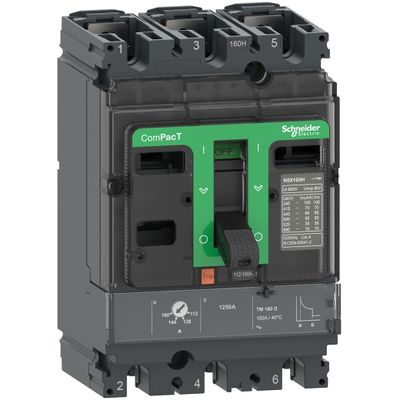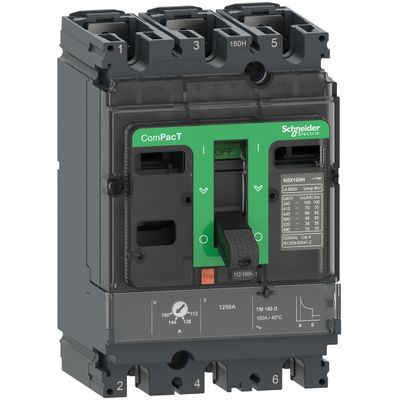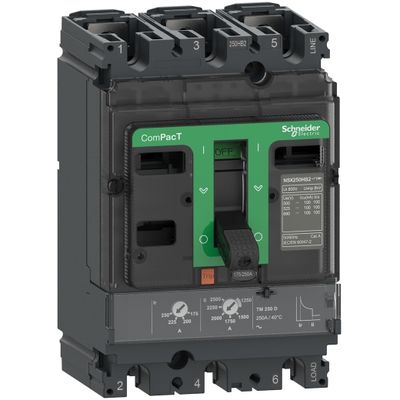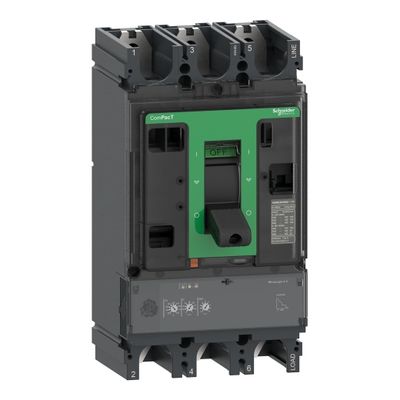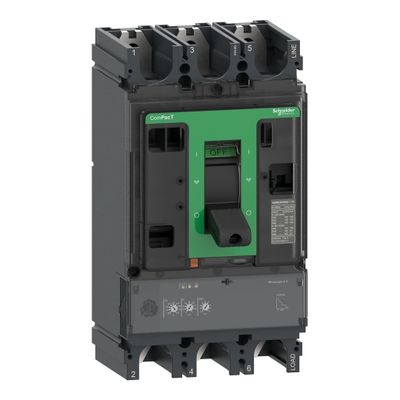

ComPacT NSX
⚡ ComPacT NSX100–630
The ComPacT NSX100–630
is Schneider Electric’s flagship MCCB range for 100–630 A
applications.
It delivers high breaking capacity, precise protection, and compact size, making it the global benchmark for LV distribution in commercial, industrial, and infrastructure projects.
🔧 What Makes NSX100–630 Stand Out
- High breaking capacity — suitable for demanding LV fault levels.
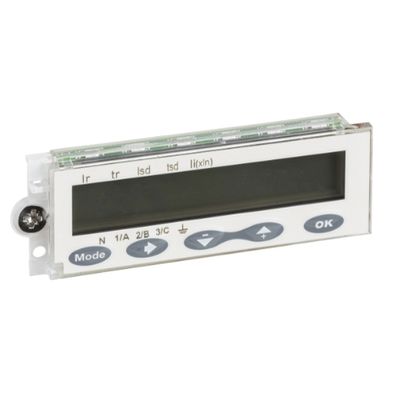
- Advanced trip units — thermal‑magnetic or electronic (Micrologic) with LSIG protection.
- Compact footprint — panel‑friendly size with strong performance.
- Modular accessories — auxiliaries, rotary handles, motor operators, and comms modules.
- EcoStruxure‑ready — monitoring and integration with BMS/SCADA (electronic models).
🛠️ Key Technical Highlights
- Current range: 100–630 A
- Protection: LSIG, earth‑leakage, adjustable thresholds
- Standards: IEC 60947‑2 compliant
- Installation: Fixed or draw‑out versions
- Maintenance: Plug‑and‑play accessories, front‑access terminals
🏭 Ideal Applications
- Commercial buildings
- Industrial plants
- Data centers
- Infrastructure
- General LV distribution boards
⭐ One‑line summary
ComPacT NSX100–630 MCCBs deliver compact, high‑capacity, adjustable protection for 100–630 A LV systems—making them the industry standard for reliable circuit protection.