
Auxiliaries
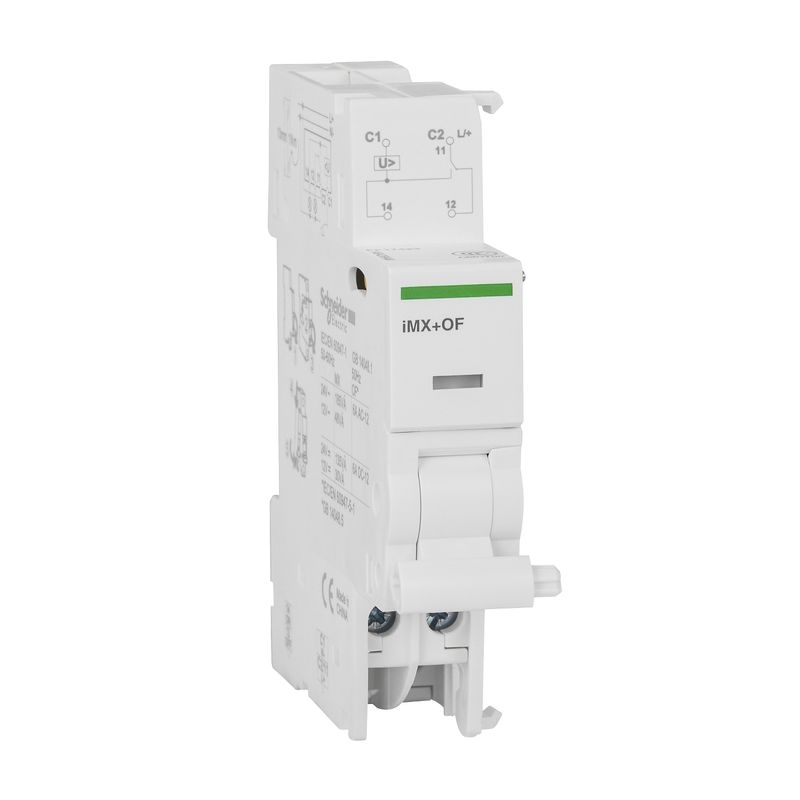
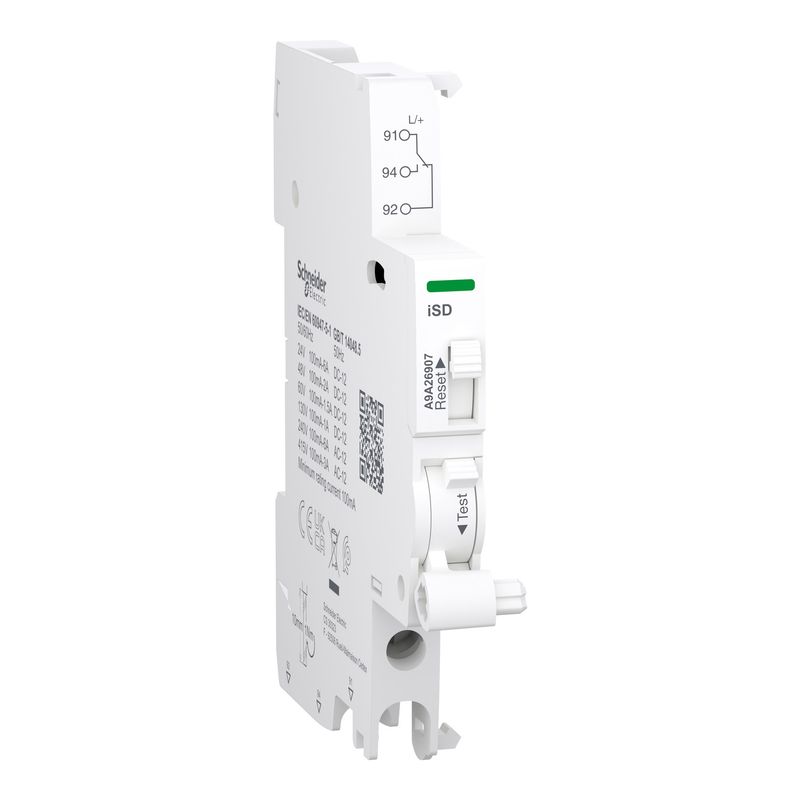
Acti 9 auxiliaries are modular accessories designed to extend the functionality of Acti 9 circuit protection devices, including MCBs, RCCBs, RCBOs, switch disconnectors, remote‑control devices, and automatic reclosers. They enable status indication, remote tripping, voltage‑dependent safety functions, and controlled automation, improving safety, reliability, and service continuity in electrical installations.
These auxiliaries are clip‑on, DIN‑rail‑compatible modules that integrate seamlessly with Acti 9 protective devices.
Types of Acti 9 Auxiliaries
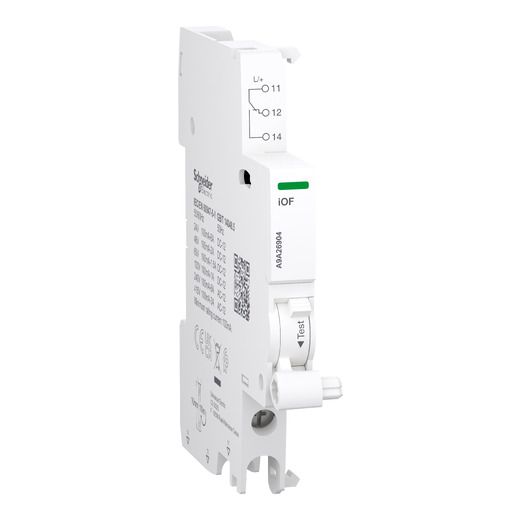
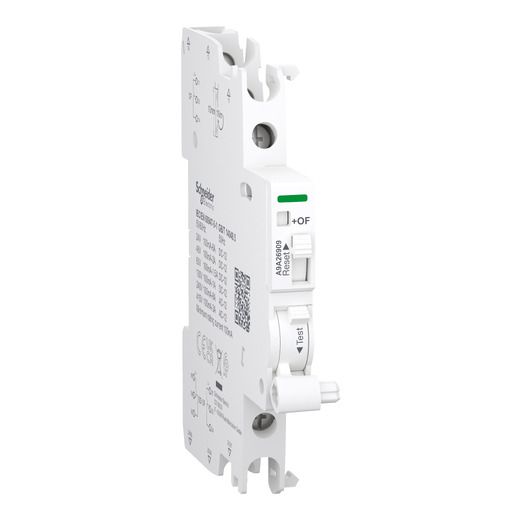
Auxiliary Contacts (iOF, iSD, OF/SD Combinations)
Auxiliary contacts provide remote electrical indication of the operating status of the protective device.
- Signal ON (closed), OFF (open), and TRIPPED conditions
- Suitable for PLCs, relays, annunciators, and building management systems
- Available in standard‑current and low‑current versions for continuous monitoring and daisy‑chain architectures
- Compliant with IEC 60947‑5‑1 control circuit standards
Typical use: Remote monitoring, alarms, and supervisory control.
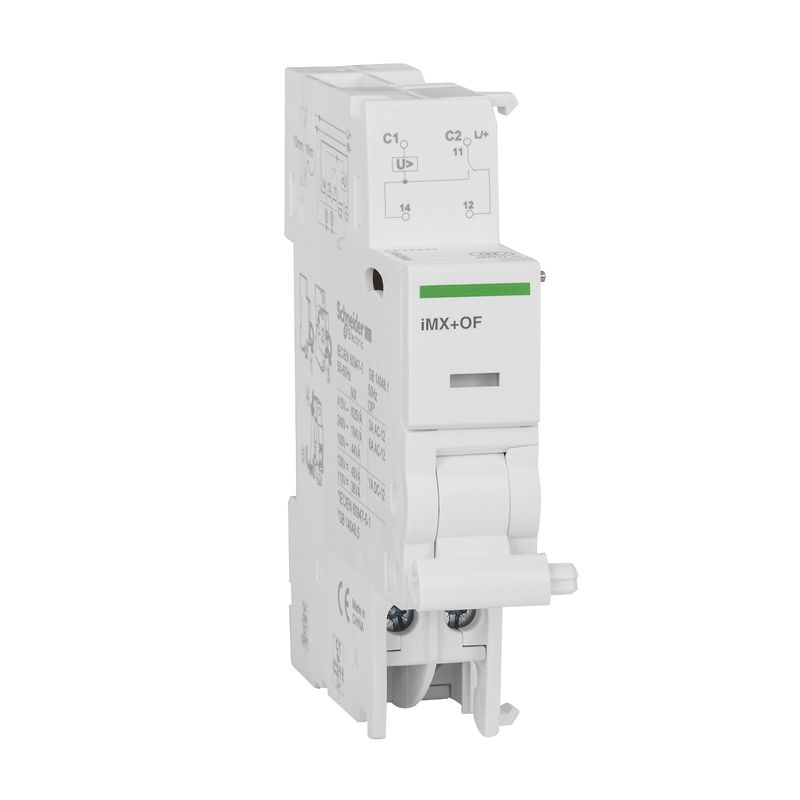
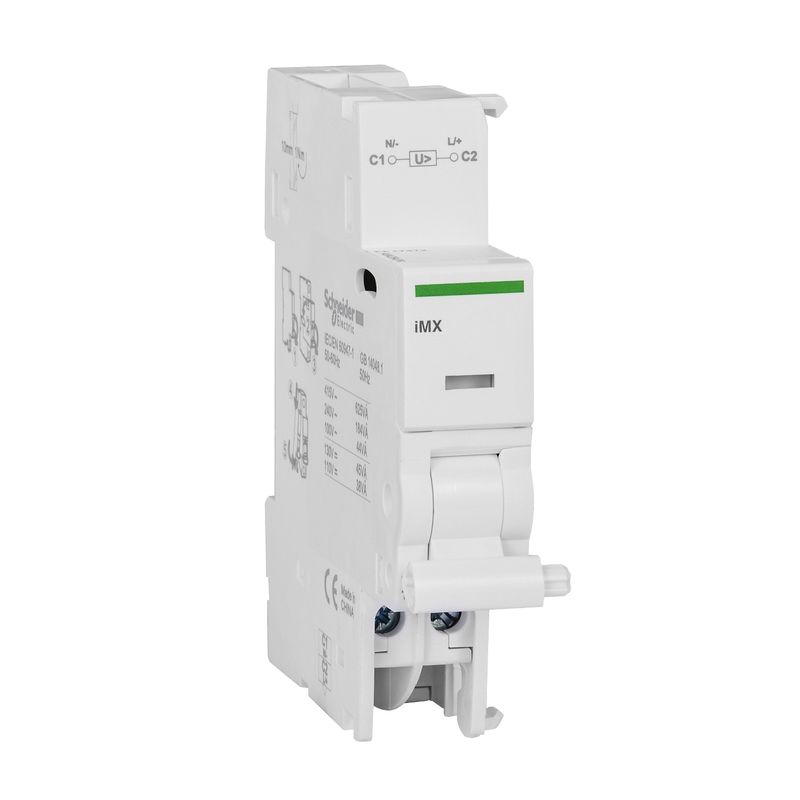
Shunt Trips (iMX)
Shunt trip modules allow remote forced tripping of a circuit breaker.
- Trip occurs when the shunt‑trip coil is energised
- Commonly activated by fire alarm systems, emergency‑stop circuits, or safety interlocks
- Causes immediate opening of the protected circuit, regardless of load current
Typical use: Emergency disconnection and safety shutdowns.
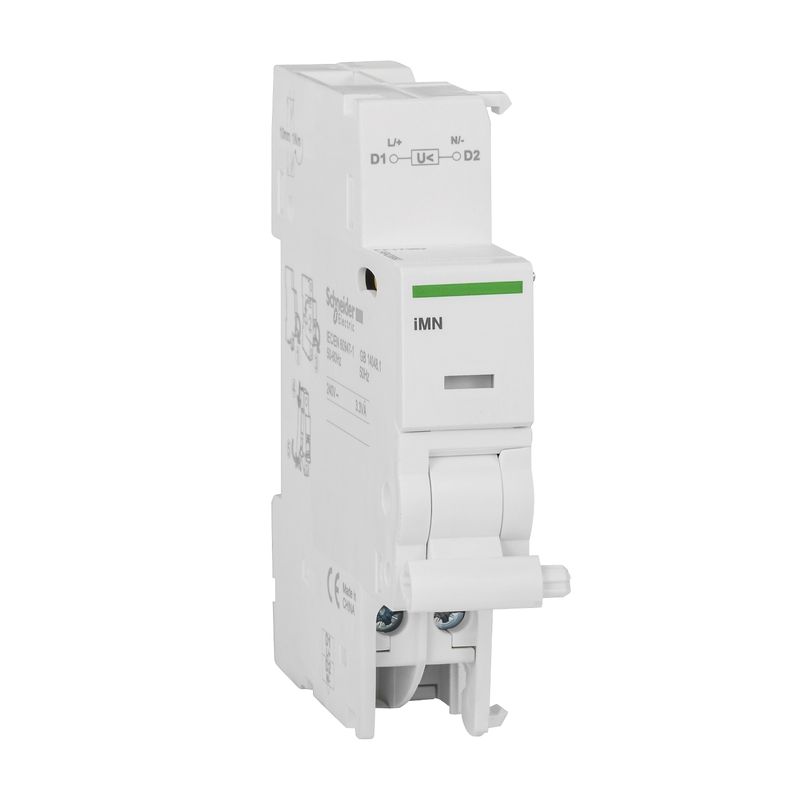
Under‑Voltage Releases (iMN)
Under‑voltage releases trip the breaker when control voltage falls below a defined level.
- Prevent dangerous automatic re‑closing after a loss of supply
- Ensure controlled restart only after voltage is restored and reset manually
- Available in instantaneous or time‑delayed versions to manage brief voltage dips
Typical use: Protection against undervoltage and unexpected restart.
Voltage Monitoring / Over‑Voltage Protection (via Tripping Auxiliaries)
While Acti 9 breakers do not contain standalone “over‑voltage release” auxiliaries in the same way as undervoltage releases, voltage monitoring relays can be combined with shunt trips to initiate tripping under abnormal voltage conditions.
- Protect sensitive equipment from supply instability
- Provide system‑level voltage supervision when integrated with control logic or relays
Typical use: Voltage‑dependent protective tripping (system‑engineered).
Remote Control Interfaces (RCA)
Remote control auxiliaries enable electrical opening and closing of circuit breakers.
- Allow ON/OFF control via hard‑wired control circuits
- Used in energy management, load shedding, and automated distribution
- Operate through control signals (not direct Ethernet or Modbus communications)
Note: Acti 9 auxiliaries themselves do not provide native Ethernet or Modbus ports. Any communication is handled by external PLCs or gateways.
Automatic Reclosers (ARA)
Automatic recloser auxiliaries restore power after transient faults.
- Automatically reclose after short‑duration faults
- Lock out after repeated unsuccessful attempts
- Improve continuity of service for non‑critical final circuits
Typical use: Reducing downtime caused by nuisance tripping.
Visual Indication (VisiTrip and Indication Features)
Visual indicators provide immediate local identification of a tripped device.
- Mechanical indicators show the exact breaker that has tripped
- Reduce fault‑finding time and maintenance intervention
Typical use: Rapid on‑site diagnostics.
Energy Monitoring (Acti 9 Integration)
Energy management is achieved in combination with Acti 9 metering devices(such as iEM meters), not by the auxiliaries themselves.
- Measure energy consumption and electrical parameters
- Provide data to energy management or automation systems
- Acti 9 auxiliaries support monitoring by supplying breaker status, not energy values
Key Benefits of Acti 9 Auxiliaries
- Enhanced safety through remote and voltage‑dependent tripping
- Improved reliability and service continuity with clear indication and automatic reclosing
- Remote monitoring capability using low‑current auxiliary signals
- Simple installation via clip‑on DIN‑rail‑mounted modules
- Flexible combinations to suit application‑specific requirements
Typical Applications
- Commercial and industrial distribution boards
- Fire alarm and emergency stop integration
- Building management and automation systems
- Energy supervision and load control architectures
- Critical installations requiring fast fault response
Summary
Acti 9 auxiliaries transform standard circuit protection devices into a monitored, remotely tripped, and automation‑ready protection system. By combining auxiliary contacts, shunt trips, under‑voltage releases, automatic reclosers, and visual indicators, Schneider Electric enables safer operation, faster fault response, and improved electrical system performance in modern installations