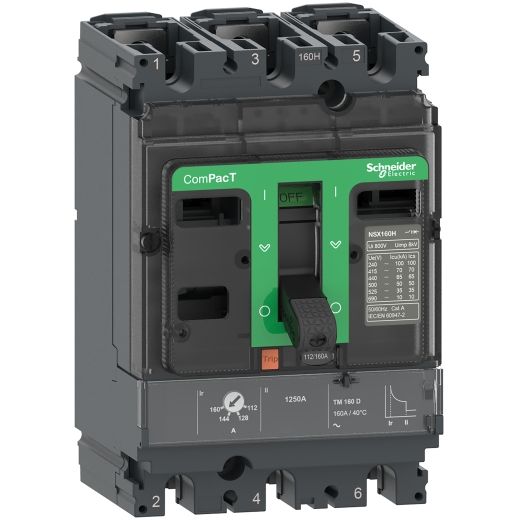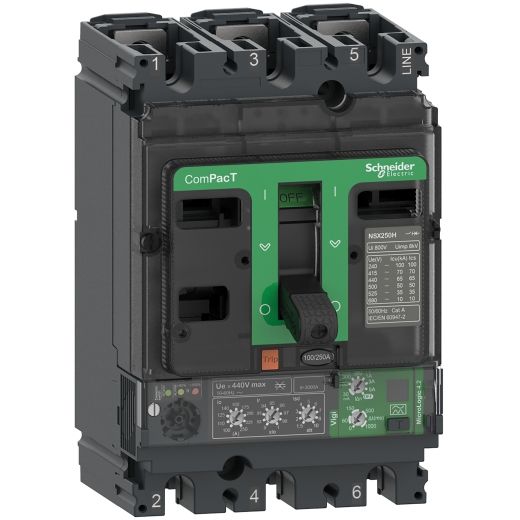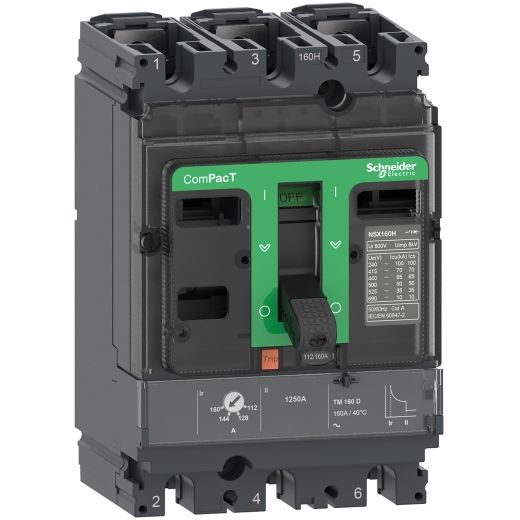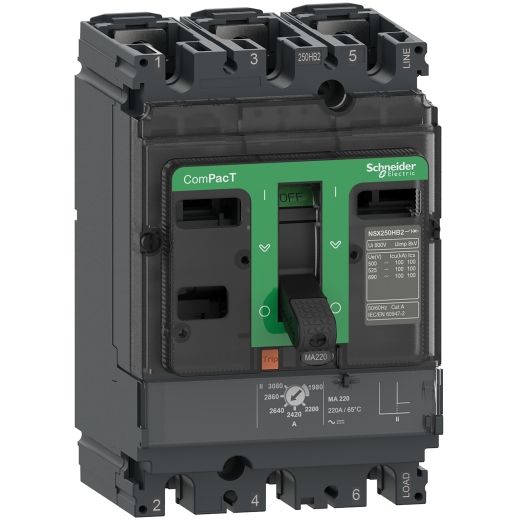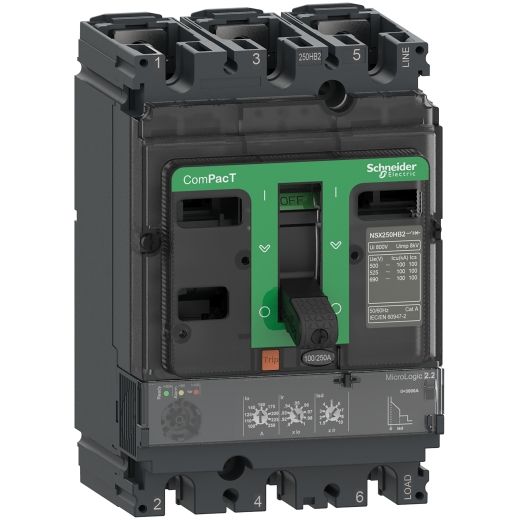

160A Frame
⚡ 160A MCCB
In an MCCB, “160A”
is the maximum continuous current rating, while the frame size
defines the physical housing, terminal capacity, and accessory ecosystem.
Rated current = electrical protection.
Frame size = mechanical platform.
🟦 Core Distinction
- Rated current (In)
Protects loads up to 160A.
The trip unit may be adjustable downward (e.g., 125A). - Frame size
Determines dimensions, terminal spacing, and which accessories fit.
A 160A frame is bigger than 100A, smaller than 250–400A.
🟧 Practical Implications
- Physical size — Moderate footprint; larger than 100A, smaller than 250–400A.
- Typical use — Medium feeders, small distribution panels.
- Breaking capacity — Higher kA options than 100A frames.
- Accessories — Full compatibility (aux contacts, shunt trip, comms).
- Integration — Fits standard DBs; larger frames need switchboards.
🟨 Selection Checklist
- Match In to load
- Check fault level(Icu/Ics ≥ prospective fault current)
- Choose trip unit(TM vs electronic)
- Confirm panel fit(dimensions + busbar/cable size)
- Add accessories if monitoring/interlocks are needed
🟫 Best Practices
- Consult datasheets — e.g., Schneider ComPacT NSX160.
- Coordination study — Ensure selectivity with upstream MCCBs/ACBs.
- Maintenance — Mechanical checks, contact inspection, thermal imaging.
- Derating — Consider temperature, altitude, and enclosure conditions.
⭐ One‑line summary
160A is the protection rating; the frame size defines the physical platform, terminals, and accessory family that support it.