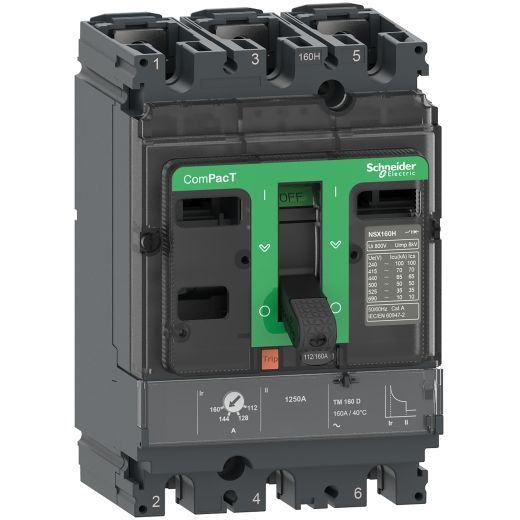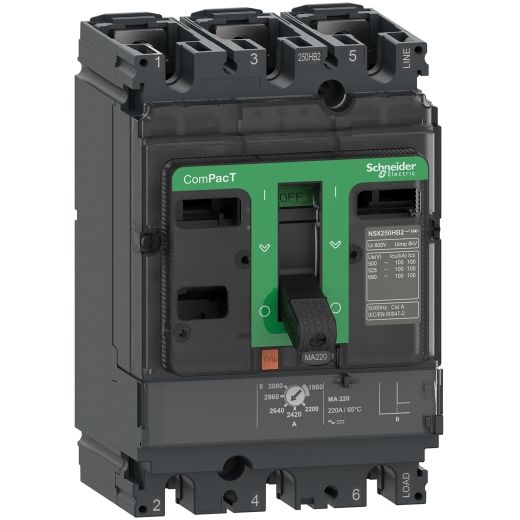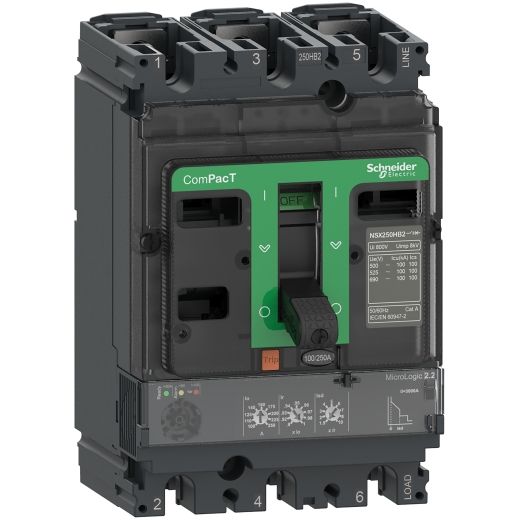

100A Frame
⚡ MCCB Rated Current vs Frame Size
In an MCCB, “100A”
refers to the maximum continuous current rating, while the frame size
defines the physical housing, terminal capacity, and accessory compatibility.
Rated current = electrical capability.
Frame size = mechanical envelope.
🟦 Core Distinction
- Rated current (In)
—
The continuous current the breaker can carry without tripping.
A 100A MCCB protects loads up to 100A. - Frame size
—
The physical size class of the breaker.
Determines dimensions, terminal size, breaking capacity, and which accessories fit.
🟧 Practical Implications
- Physical size
—
100A frames are compact; 250–630A frames are larger and heavier. - Typical use
—
100A: small feeders, branch circuits
Larger frames: main feeders, big motors, higher‑fault zones - Breaking capacity
—
Larger frames offer higher kA ratings. - Accessories
—
Small frames: basic auxiliaries
Large frames: advanced trip units, comms, motor operators - Panel integration
—
100 A frames fit compact DBs; larger frames need more space.
🟨 Selection Checklist
- Load current — In ≥ continuous load
- Fault level — Icu/Ics ≥ prospective fault
- Trip unit type — TM for simple loads; electronic for LSIG
- Panel fit — Check dimensions + busbar/cable size
- Accessories — Aux contacts, shunt trip, comms if needed
🟫 Best Practices
- Consult datasheets — Dimensions, torque, accessory list
- Coordination study — Ensure selectivity with upstream ACB/MCCB
- Maintenance — Mechanical checks, contact inspection, thermal imaging
⭐ One‑line summary
Rated current defines what the MCCB protects; frame size defines the physical platform and accessory ecosystem that supports it.